
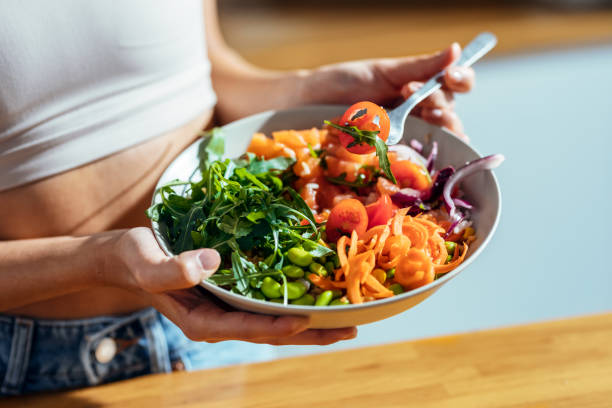
Walk into any grocery store, scroll through any fitness account, or ask your group chat what to eat — and you'll get a different answer every time. Keto. Intermittent fasting. High protein. No carbs. Clean eating. Intuitive eating. The noise around women's nutrition is so loud and so contradictory that most women end up doing one of two things: following extreme rules that aren't sustainable, or throwing their hands up entirely and just winging it.
Neither works. And neither is necessary.
Nutrition for women doesn't have to be complicated. It doesn't have to be restrictive. And it absolutely does not need to feel like punishment. What it does need to be is personalized, intentional, and built around how your specific body works.
This guide cuts through the noise with the actual nutrition principles that help real women lose fat, build lean muscle, support their hormones, and sustain their results for life — not just for the next eight weeks.
Before diving into specific nutrition tips for women, it's worth understanding why generic nutrition advice so often fails women specifically. Your body is not the same as a man's body — not hormonally, not metabolically, and not physiologically. A one-size-fits-all nutrition approach designed for the average person is almost certainly not optimized for you.
Women face unique physiological challenges, including hormonal fluctuations, different metabolic rates, and varying nutritional needs throughout different life stages. Ladiesfirstrocks
Hormonal fluctuations throughout the menstrual cycle directly affect hunger levels, energy, cravings, recovery capacity, and how your body uses fuel. During the luteal phase — the week before your period — progesterone rises, serotonin dips, and carbohydrate cravings intensify. This is biology, not a lack of willpower. A nutrition strategy that doesn't account for these natural fluctuations will feel like a constant fight against your own body.
Women's bodies are also designed to preserve energy stores more efficiently than men's — a biological adaptation that affects how quickly fat comes off and requires a genuinely personalized approach rather than a generic calorie target. Ladiesfirstrocks
Understanding this doesn't mean fat loss is harder for women — it means it requires a smarter, more individualized approach. And that is exactly what the nutrition coaching at Flourished Fitness is built to deliver.
If there is one nutrition tip for women that outweighs every other — it is this: eat more protein. Most women are chronically under-eating protein without realizing it, and it is one of the primary reasons they struggle to see the body composition changes they're working toward.
Here is what adequate protein does for a woman focused on fat loss and body recomposition. It preserves and builds lean muscle tissue while you're in a calorie deficit — protecting the metabolic machinery that keeps fat burning efficiently. It has the highest thermic effect of any macronutrient, meaning your body burns significantly more calories just digesting protein than it does digesting carbohydrates or fat. Protein increases production of satiety hormones including GLP-1, PYY, and CCK, reduces ghrelin — the hunger hormone — and uses 20 to 30 percent of its calories just for digestion, compared to 5 to 10 percent for carbohydrates and 0 to 3 percent for fats. Zing Coach
It also keeps you fuller for longer, reducing the mindless snacking and late-night hunger that derail nutrition plans far more often than poor food choices at mealtimes.
Studies show that people consuming 0.8 to 1 gram of protein per pound of body weight lose 38 percent more fat and retain significantly more muscle compared to lower protein intakes. Zing Coach
A practical goal for most active women is 0.7 to 1 gram of protein per pound of body weight per day. Quality protein sources to build meals around include chicken breast, turkey, fish and seafood, eggs and egg whites, Greek yogurt, cottage cheese, lean beef, and plant-based options like tofu, tempeh, edamame, and legumes.
Tip in practice: At every meal, put the protein source on your plate first. Then build the rest of the meal around it. This single habit change can dramatically shift your daily nutrition without requiring any calorie counting.
Carbohydrates have been the villain in women's nutrition culture for decades, and it has cost women enormously in performance, hormonal health, and sustainability. The truth is that carbohydrates are not your enemy — they are your body's preferred fuel source, and eliminating them entirely is one of the worst things you can do for your training, your hormones, and your long-term results.
Carbohydrates fuel your workout sessions. Without adequate carbohydrate intake, your training performance drops — you lift less, recover slower, and make fewer gains. They support the production of serotonin, the neurotransmitter that regulates mood and hunger. They are critical for hormonal health, including the reproductive hormones that make your menstrual cycle function normally. Women who chronically under-eat carbohydrates often experience hormonal disruption, irregular periods, fatigue, brain fog, and worsening body composition — not improvement.
Cutting out too many carbohydrates can lead to sluggishness and decreased workout performance, while choosing the right types of carbs supports energy and results. Daily Burn
The goal is not to eliminate carbohydrates — it is to choose the right sources and time them strategically. Complex carbohydrates like oats, sweet potatoes, rice, quinoa, fruit, and vegetables provide sustained energy, fiber for gut health and fullness, and the micronutrients your body needs to perform and recover. Refined carbohydrates — white bread, packaged snacks, sugary cereals — spike blood sugar rapidly and provide little nutritional return. Choose your carbohydrates with intention, not elimination.
Tip in practice: Time your higher-carbohydrate meals around your training sessions. A carbohydrate-containing meal before your workout fuels your performance. A protein and carbohydrate combination after your workout supports recovery and muscle protein synthesis.
Dietary fat is another macronutrient that has been unjustly demonized in women's nutrition, and the consequence of chronic low-fat eating shows up in disrupted hormones, impaired recovery, poor skin and joint health, and diminished overall wellbeing.
Healthy fats help regulate hunger hormones and support metabolism. They also aid in the absorption of fat-soluble vitamins A, D, E, and K — which are crucial for overall health. Many women who have spent years on low-fat diets are deficient in these vitamins without knowing it, contributing to fatigue, immune dysfunction, and hormonal imbalances that feel mysterious but are directly nutritional in origin. Daily Burn
Healthy dietary fats support the production of estrogen, progesterone, and other reproductive hormones. They support brain function and cognitive performance. They support joint lubrication and reduce exercise-related inflammation. And because fat slows gastric emptying, fat-containing meals keep you satisfied far longer than fat-free equivalents.
Quality fat sources to include consistently include avocados, olive oil, nuts and nut butters, seeds, fatty fish like salmon and mackerel, whole eggs, and coconut products in moderation. These are not foods to minimize — they are foods to include intentionally as part of a balanced, nourishing eating strategy.
Tip in practice: Include at least one quality fat source at every meal. A handful of almonds, a drizzle of olive oil, half an avocado, or a serving of salmon all count. Fat is not the enemy — it is fuel.
Calories matter. There is no way around this fundamental principle — to lose body fat you need to consume fewer calories than you burn, and to build lean muscle you need adequate calories to support that process. But most women either severely over-restrict their calories or have no idea what their actual intake looks like.
Both extremes produce poor results. Eating too little triggers metabolic adaptation, muscle loss, and hormonal disruption — making fat loss progressively harder the longer you restrict. Eating too much prevents fat loss entirely. The goal is a strategic, moderate calorie deficit that produces consistent fat loss while preserving lean muscle and supporting your energy and performance.
A moderate deficit of 300 to 500 calories below your total daily energy expenditure is the sweet spot for most women focused on sustainable fat loss. This produces approximately 0.5 to 1 pound of actual fat loss per week — which is not dramatic, but it is real, sustainable, and free of the muscle loss and metabolic damage that extreme deficits cause.
Your calorie needs are not static. They change as your body weight changes, as your activity level changes, and as your body adapts to your current intake. This is exactly why the personalized nutrition coaching at Flourished Fitness includes ongoing adjustments — because the targets that were right for your body three months ago may no longer be right for your body today. Your coach recalibrates your nutrition strategy in real time based on how your body is actually responding.
Tip in practice: If you've never tracked your food intake for even a short period, doing so for one to two weeks can be enormously revealing. Most women are shocked to discover they're either significantly under-eating protein or accidentally eating far more total calories than they realized.
One of the most consistent nutrition mistakes women make is consuming very little protein at breakfast and lunch, then loading a large amount at dinner. While total daily protein is the most important factor, research on muscle protein synthesis — the process through which your body builds and repairs lean muscle — suggests that distributing protein more evenly throughout the day produces better body composition results than concentrating it in one or two meals.
Aiming for around 30 grams of protein for main meals, with a clear goal for each eating occasion, makes planning easier and ensures consistent muscle-supporting protein availability throughout the day. Daily Burn
Practically, this means prioritizing a high-protein breakfast rather than a carbohydrate-dominated one. Eggs, Greek yogurt, cottage cheese, smoked salmon, a protein smoothie — all are excellent morning protein sources that set your nutrition up for success from the first meal of the day. Lunch and dinner should similarly anchor around a quality protein source, with carbohydrates and fats supporting the meal around it.
Tip in practice: Calculate your daily protein goal and divide it roughly into equal thirds across three meals. If your goal is 140 grams of protein per day, aim for approximately 45 to 50 grams per meal rather than 20 grams at breakfast, 20 at lunch, and 100 at dinner.
Whole, minimally processed foods should make up the foundation of your nutrition. Vegetables, fruits, lean proteins, whole grains, legumes, nuts, seeds, and healthy fats provide the nutrients, fiber, and micronutrients your body needs to perform, recover, and thrive. These foods are higher in nutritional value per calorie, more satiating, and more supportive of hormonal health and long-term wellbeing than their processed counterparts.
But here's the nutrition tip for women that most rigid plans won't tell you: flexibility is not the enemy of results. A small amount of enjoyable food that doesn't fit a "clean eating" definition does not undo your progress. The woman who eats whole foods 85 to 90 percent of the time and enjoys a treat without guilt the other 10 to 15 percent will always outperform the woman who follows a perfect plan for three weeks and then abandons it entirely out of deprivation.
This is the philosophy behind macro-based nutrition — the approach at the core of every Flourished Fitness program. Rather than telling you what you can and cannot eat, macro-based nutrition gives you targets for protein, carbohydrates, and fat that you hit through the foods you enjoy. There are no forbidden foods — only an understanding of how to fuel your body in a way that gets you to your goals.
Tip in practice: Build your meals around whole foods first. Then, if there's room in your macro targets for something you enjoy — have it, without guilt, and move on. Sustainable nutrition has space for real life.
Hydration is one of the most consistently underestimated factors in women's nutrition. Adequate water intake directly supports fat metabolism, training performance, recovery, appetite regulation, and even cognitive function. Dehydration — even mild dehydration — impairs all of these.
Thirst is also regularly mistaken for hunger, leading to unnecessary caloric intake. Many women who struggle with afternoon snacking, late-night hunger, or persistent cravings are actually mildly dehydrated — and a glass of water addresses the symptom more effectively than food.
A practical starting target for most active women is roughly half your body weight in ounces of water per day — and more on training days or in hot weather. Coffee and tea count toward this target. Sugary drinks, alcohol, and heavily processed beverages do not.
Tip in practice: Drink a full glass of water first thing in the morning, before your first meal. Keep a water bottle visible throughout the day. Before reaching for a snack between meals, drink a glass of water and wait ten minutes. If the hunger was actually thirst, it will resolve.
The most important nutrition tip for women on this entire list might be this one: stop following plans that were built for someone else.
Fad diets — keto, extreme calorie restriction, juice cleanses, elimination diets, single-food approaches — share a common fatal flaw. They are built for a theoretical average person, not for your body, your hormones, your training demands, your lifestyle, or your history with food. They may produce short-term results, but they are biologically designed to fail long-term. Rather than relying on restrictive dieting that triggers compensatory mechanisms in the brain, successful, lasting fat loss happens when you align your eating habits with your body's natural signals and build sustainable behaviors. Ladiesfirstrocks
The nutrition strategy that produces lasting results for you is built around your specific calorie needs, your macro targets, your food preferences, your schedule, and your goals — and it evolves as those things change. That is the only kind of nutrition plan worth following.
At Flourished Fitness, macro-based nutrition coaching is personalized from the first day of your program. Your coach builds your targets around you, teaches you how to hit them with foods you actually enjoy, and adjusts your strategy as your body changes and your goals evolve. You don't get a meal plan to follow robotically — you get the education and the guidance to understand your nutrition in a way that empowers you for life.
These eight nutrition tips for women don't operate in isolation — they form an integrated strategy that supports each other at every level. High protein intake preserves muscle and controls hunger. Strategic carbohydrate use fuels training and supports hormones. Adequate healthy fat supports hormonal production and satiety. Moderate, sustainable calorie targets create consistent fat loss without metabolic damage. Consistent hydration supports every metabolic process. Whole-food foundations provide the micronutrients that keep everything running. And flexibility ensures the approach is sustainable enough to actually last.
This is not a temporary diet. This is a way of eating that becomes your lifestyle — and the women in the #FlourishedWomen community who have sustained their transformations for years are living proof of what these principles produce when applied consistently, with expert guidance and personalized precision.
Reading nutrition tips for women is the beginning of the education. Applying them to your specific body, your specific goals, and your specific life is where the real work happens — and that application is dramatically more effective with expert support.
Your macro targets, your calorie needs, your protein distribution, and your timing strategy all need to be calibrated to you — not to a generic formula. And as your body changes, those targets need to evolve. This is what ongoing nutrition coaching delivers: a strategy that was built for you, managed by someone who knows your history and your goals, and adjusted in real time based on how your body is actually responding.
The Flourished Fitness nutrition coaching program is built around exactly this approach — macro-based, personalized, educational, and sustainable. Not a diet. Not a set of rules. A genuine understanding of how to fuel your body for the results you want — and the lifestyle you deserve.

Tired of following plans that weren't built for your body?
Fill out the Flourished Fitness client application today and take the first step toward a personalized nutrition and coaching program built specifically for you. Your free consultation is waiting — and your results start with one conversation.


.svg)


