
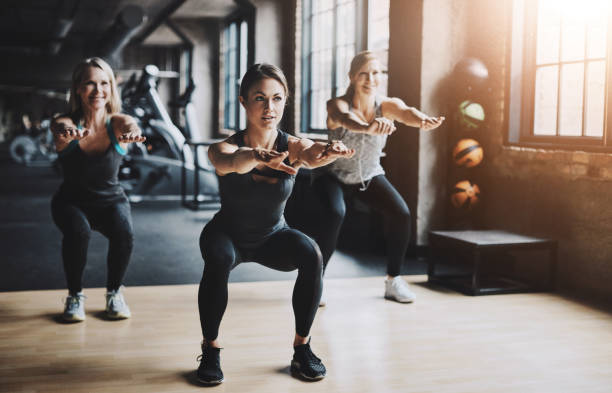
Of all the fitness goals women bring to the gym, glute growth is consistently at the top of the list. And for good reason — strong, developed glutes don't just look incredible. They are the most powerful muscle group in your body, responsible for everything from how you move to how you perform, and from how your lower back feels to how confidently you carry yourself.
But here's the frustrating reality most women experience: they are doing glute workouts. They are squatting, doing donkey kicks, wearing a booty band. And yet their glutes are barely changing.
That is not a genetics problem. It is a strategy problem.
Growing your glutes as a woman requires a specific combination of the right exercises, intelligent programming, progressive overload, and the nutritional support to fuel muscle growth. When all of these variables are dialed in correctly — the transformation is not just possible, it's predictable.
This guide covers everything you need to know to finally grow your glutes, from the science behind glute muscle growth to the exact exercises and nutrition strategy that gets results.
Before diving into how to grow your glutes, it helps to understand what you're actually training. Your glutes are not one muscle — they are a group of three distinct muscles, each with specific functions and training requirements.
Gluteus Maximus — the largest and most powerful muscle in your body. It is responsible for hip extension, which is the movement of pushing your hips forward. It is the primary driver of every squat, hip thrust, deadlift, and lunge. When most women talk about wanting bigger, rounder glutes, the gluteus maximus is the primary target.
Gluteus Medius — located on the outer side of your hips. It stabilizes your pelvis during walking, running, and any single-leg movement. Strong glute medius muscles prevent knee collapse, reduce lower back pain, and create the curved, athletic hip shape many women desire. It is trained most effectively through lateral movements, abduction exercises, and single-leg work.
Gluteus Minimus — the smallest and deepest of the three, it works synergistically with the gluteus medius to stabilize the pelvis and support single-leg movements. Training it directly requires hip abduction movements and lateral stepping exercises.
A complete glute training program targets all three muscles through a variety of movement patterns — not just squats. This is why most women's glute training stalls: they repeat the same two or three exercises without addressing the full anatomical complexity of the glute complex.
If you've been training your glutes consistently and not seeing results, one of these is almost certainly the reason.
You're not applying progressive overload. This is the most common and most costly mistake in glute training. If you have been using the same dumbbell weight, the same band, the same exercises at the same reps for more than four to six weeks — your glutes have adapted. They have learned to meet that demand efficiently without growing further. Progressive overload means consistently increasing the training challenge over time. Without it, your glutes have zero reason to grow.
You're relying on isolation movements instead of compound lifts. Donkey kicks, fire hydrants, and clamshells have their place in glute training — but they cannot be the foundation of your program. Heavy, compound movements like hip thrusts, Romanian deadlifts, and Bulgarian split squats are the primary drivers of glute hypertrophy because they allow for the heavy loading that creates the mechanical tension needed for muscle growth.
You're not training your glutes with enough frequency. Research suggests that when it comes to hypertrophy and targeting growth of a specific muscle group, training frequency should be a minimum of two days per week, with 10 to 15 sets per week directed at that muscle. Many women train glutes once a week — which is simply not enough stimulus for meaningful growth. Ascend Medical
Your glutes aren't firing properly. Tight hip flexors from sitting, underactive glutes from sedentary habits, or poor movement mechanics can cause other muscles — your quads, your lower back — to take over during exercises that should be targeting your glutes. Glute activation work before training helps ensure your glutes are recruited effectively during your main lifts.
Your nutrition isn't supporting muscle growth. You cannot build a significant amount of lean muscle while severely under-eating or failing to meet your protein targets. Muscle growth requires adequate protein, adequate calories, and the nutritional environment that supports recovery and tissue repair. Without the nutrition to match the training, glute growth will be minimal regardless of how hard you work.
Not all glute exercises are created equal. The exercises that produce the most growth are the ones that allow for the heaviest loading, the greatest range of motion, and the most direct mechanical tension on the gluteus maximus. Here are the highest-return exercises for growing your glutes — and why each one belongs in your program.
The hip thrust is the undisputed king of glute training. No other exercise places as direct a loading stimulus on the gluteus maximus through its full range of motion as the hip thrust — and that direct loading is what drives the muscle growth that creates shape, roundness, and strength.
Research has revealed slightly higher levels of gluteus maximus activation during hip thrusts compared to other exercises like back squats and split squats — making it the most targeted glute exercise available. D1 Training
To perform a hip thrust: sit on the floor with your upper back against a bench or sturdy surface. Place a dumbbell or barbell across your hips. Bend your knees, plant your feet flat on the floor. Drive your hips upward by squeezing your glutes hard, until your body forms a straight line from shoulders to knees. Hold the top position for one full second with a maximum glute contraction, then lower with control.
The hip thrust should be the first exercise in your glute training session — when your energy and focus are highest. Train it heavy, with full range of motion, and with deliberate progressive overload every session. Your hip thrust numbers should be consistently climbing over time.
Programming: 3 to 4 sets of 8 to 12 reps. Load heavily enough that the last two reps feel genuinely challenging.
The Romanian deadlift targets the glutes and hamstrings in their lengthened position — which is critical for developing the lower glute shape and the curve between the glute and hamstring that many women want to develop. Lengthened-position loading has been shown to be particularly effective for muscle hypertrophy because of the greater stretch placed on the muscle fibers.
To perform a Romanian deadlift: stand with feet hip-width apart holding dumbbells or a barbell in front of your thighs. Hinge at the hips — pushing them back while maintaining a neutral spine — and lower the weight along your legs until you feel a deep stretch in your hamstrings. Drive your hips forward to return to standing, squeezing your glutes hard at the top.
The Romanian deadlift is arguably the single most valuable exercise for women's lower body development. The glute-hamstring tie-in it develops is one of the primary visual indicators of a strong, trained physique — and it is one of the movements most neglected in typical women's training programs.
Programming: 3 to 4 sets of 8 to 12 reps. Focus on feeling the stretch in the hamstrings at the bottom and the glute contraction at the top.
The Bulgarian split squat is one of the most challenging exercises in any lower body program — and one of the most effective for glute development, particularly the gluteus maximus and gluteus medius together. Training one leg at a time forces greater glute activation, addresses strength imbalances between sides, and allows for a deep hip flexion position that maximizes glute loading.
To perform a Bulgarian split squat: stand facing away from a bench or chair. Place your rear foot on the surface. Lower your body until your front thigh is approximately parallel to the floor, keeping your torso upright and your front knee tracking over your foot. Drive through your front heel to return to the starting position, squeezing your front glute at the top.
This exercise demands quality over quantity — slow, controlled reps with full depth produce significantly better glute results than fast, shallow reps with heavier weight.
Programming: 3 sets of 8 to 10 reps per leg. Start with bodyweight or light dumbbells and build weight progressively.
Squats are one of the most debated exercises in glute training — some argue they are overrated for glute growth specifically, while others consider them foundational. The reality is nuanced: squats produce significant overall lower body development, with glute involvement depending heavily on depth, stance, and loading.
Deeper squats with a wider stance generally produce greater glute activation than shallow, narrow squats. Goblet squats, sumo squats, and barbell back squats all develop the glutes while simultaneously building quad strength, hip mobility, and total lower body power.
Squats should complement, not replace, hip-dominant movements like hip thrusts and Romanian deadlifts in a complete glute program.
Programming: 3 to 4 sets of 8 to 12 reps with progressive loading over time.
The single-leg Romanian deadlift targets the glute medius and the hip stabilizers in a way that bilateral movements cannot replicate. It develops the side and upper glute area that creates a rounder, more three-dimensional glute shape — and it builds the hip stability that makes all other lower body movements safer and more effective.
To perform: stand on one leg, hold a dumbbell in the opposite hand, and hinge at the hip while extending the free leg behind you for balance. Lower until your torso and rear leg are approximately parallel to the floor, then return to standing by driving through your planted heel and squeezing your glute.
Programming: 3 sets of 8 to 10 reps per side. Control the movement — stability is the primary challenge.
Before your main lifting movements, a short glute activation sequence ensures your glutes are recruited effectively during the compound exercises that follow. Tight hip flexors and underactive glutes are extremely common — and they allow other muscles to dominate movements that should be targeting the glutes.
Effective activation exercises include glute bridges (bodyweight or banded), banded clamshells, monster walks, and lateral band steps. These are not the core of your training — they are the warm-up that makes the core of your training more effective.
Spend five to ten minutes on activation before every glute-focused session.
Growing your glutes requires a structured program — not random exercises. Here is what the research and real-world coaching confirms works best:
Training frequency: Train glutes two to three times per week with at least 48 hours between sessions. This frequency provides enough stimulus for growth while allowing the recovery time that actual muscle building requires.
Weekly volume: Aim for 10 to 15 challenging sets per week directed at the glutes. This can be distributed across two or three sessions — for example, five sets per session across three sessions.
Rep ranges: Use a combination of heavy loading for lower reps (5 to 8 reps for compound lifts like hip thrusts) and moderate loading for moderate reps (8 to 12 reps for most hypertrophy work) and higher reps for finishing moves and isolation exercises (12 to 20 reps for band work and isolation moves).
Progressive overload: Every session, aim to do slightly more than the last. Add weight to your hip thrust. Add a rep to your Romanian deadlift. Reduce your rest period on your split squats. Track every session and use that data to inform every subsequent session. Without progressive overload, your glutes will not grow — full stop.
This is the question every woman asks before starting a glute-focused program — and having a realistic expectation is essential for staying consistent long enough to see results.
Most people notice strength improvements within two to three weeks, feel muscle changes by four to six weeks, and see clear visual changes by eight to twelve weeks with consistent training and proper nutrition. Sanitarium
The first visible changes in glute size and shape can often be detected within four to eight weeks of dedicated training — these initial improvements are frequently due to improved muscle tone, better neuromuscular connection, and rapid adaptation known as newbie gains. However, accumulating significant, lasting muscle mass generally requires a commitment of six to twelve months or more of consistent, progressive training. Menopausesolutions
The women who build genuinely impressive glutes are the ones who commit to the process for months and years — not the ones who follow a booty challenge for three weeks and then move on. Building muscle is a slow, rewarding, cumulative process.
Training provides the stimulus for glute growth. Nutrition provides the resources for it to actually happen. Without the right nutritional foundation, your training effort produces a fraction of its potential results.
Protein is the priority. Protein is the building material of muscle tissue. Without adequate protein, your body cannot repair and rebuild the muscle fibers that are broken down during training. Aim for 0.7 to 1 gram of protein per pound of body weight daily, distributed across all meals.
Eat enough calories. You cannot build significant muscle while severely under-eating. A surplus of approximately five to ten percent above maintenance calories is sufficient to fuel muscle protein synthesis without causing excessive body fat accumulation. If fat loss is also a goal, body recomposition — eating near maintenance with high protein and progressive training — can allow for simultaneous fat loss and glute building, particularly for beginners. Franciscan Health
Carbohydrates fuel your training. Heavy glute work is glycolytically demanding. Carbohydrates are your body's preferred fuel source for intense resistance training, and under-eating carbohydrates directly impairs your training performance, your recovery, and ultimately your glute growth. Do not eliminate carbohydrates when pursuing glute growth.
Sleep is when your glutes actually grow. During deep sleep, the body regulates hormones including the release of human growth hormone, which is involved in muscle repair and growth. Chronic sleep deprivation can increase cortisol, interfering with muscle-building efforts. Seven to nine hours of quality sleep every night is a training variable — not a lifestyle luxury. Womenswellnessmd
The fastest path to glute growth is a program specifically designed for your body, your training history, your equipment access, and your goals — managed by a coach who tracks your progress and adjusts the variables in real time.
Generic glute programs are designed for the average woman. Your body is not average. Your response to training, your nutritional needs, your weak points, your recovery capacity — all of it is specific to you. The program that would maximize your glute growth looks different from the program that would maximize someone else's.
At Flourished Fitness, every training program is built specifically around you — including the exercises, loading, frequency, and progression model best suited to your current fitness level and goals. Your weekly check-ins mean your coach is actively tracking your strength progression, identifying what's working, and adjusting your program the moment something stops producing results. And your nutrition plan is built to support the muscle building you're training for.
The women in the #FlourishedWomen community who have built genuinely strong, developed glutes didn't do it with a random YouTube program. They did it with a personalized plan, expert oversight, and the accountability that made consistency sustainable over the months required to see real transformation.
Growing your glutes is not a mystery. It is not reserved for women with good genetics or those who have been training for years. It is a predictable outcome of the right exercises, progressive overload, adequate frequency, and the nutritional support to back it all up — applied consistently over time.
The women who have the glutes they want are the women who stopped doing random workouts and started following a structured, progressive, personalized plan. That plan is exactly what Flourished Fitness builds for every woman who walks through the door.

Ready to build the glutes you've been working toward — with a plan that's actually built for your body?
Fill out the Flourished Fitness client application today and take the first step toward a personalized training and nutrition program designed to maximize your glute growth — and every other goal on your list. Your free consultation is waiting.


.svg)


